
Published
On 28 October 2026, I gave a 10-minute talk in Madrid called "I automated my own AE job. Mostly."
The "mostly" matters. This is a seller's view from inside the agent, including the parts that broke.

Why are AEs automating their own jobs now?
AEs are automating their own jobs now because agents are already part of outbound, whether a rep builds their own setup or not.
I opened my talk with three numbers from The State of Agentic Sales 2026, Amplemarket Research's report on nearly 49 million prospects from January 2022 to September 2026:
- More than 1 in 3 new prospects now receive AI-assisted outreach, up from almost none two years ago.
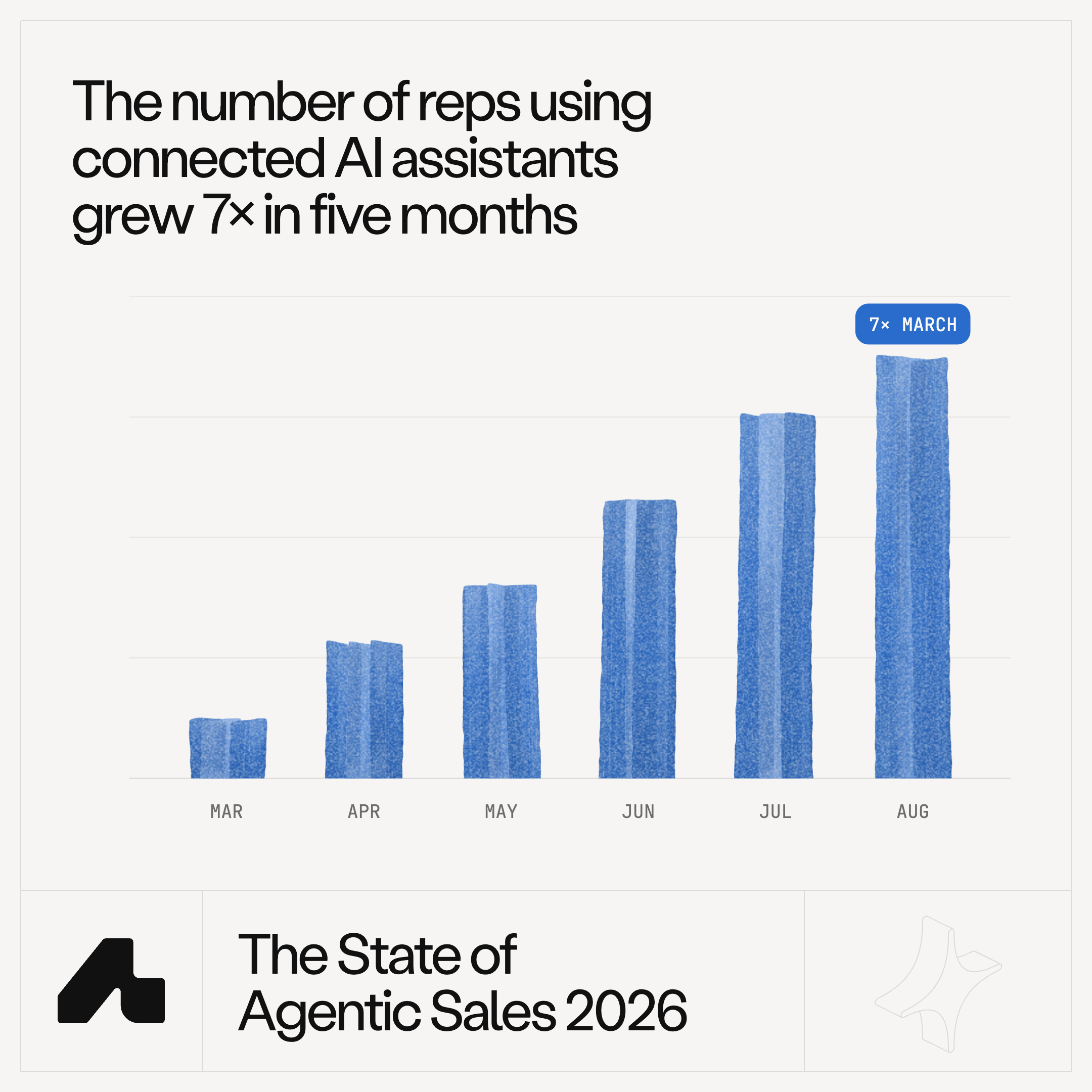
- The number of reps using connected AI assistants grew 7x in five months.
- 3 in 10 new outbound opportunities at the typical team now trace back to AI, up from 11% a year earlier.

So the question for a seller is no longer whether AI will touch your pipeline. It's whether you'll be the one deciding how.
Where was my time actually going?
I run full sales cycles across EMEA, UK, DACH and LATAM: prospecting, demos, trials, pricing and closing.
Before automating, most of my time went to the stuff around selling, not selling itself. Digging through Salesforce for overdue next steps, rereading email threads to remember where a deal was, rewatching calls to write follow-ups, building lists and writing copy. Honestly, probably 80% of my week was admin.
The biggest time sinks were daily follow-ups, account research, post-call follow-ups, multithreading and CRM hygiene.
None of it is hard, and all of it matters. That's exactly why it eats the week.
What does an AE's agentic stack look like?
An AE's agentic stack can be one AI agent connected through MCP to the tools they already use: the CRM, email, call recordings, product data, chat and docs.
I built it because I got tired of being the bottleneck on my own pipeline. My setup is Claude connected through MCP to the tools in my day:
→ Salesforce for opportunities, next steps and contact roles.
→ Gmail for full threads in and drafts out.
→ Attention for calls, objections and the competitors prospects name.
→ Snowflake for trial usage and who actually logs in.
→ Slack for deal desk and legal, drafted, never sent.
→ Notion for pricing, collateral and competitive intel.
→ Amplemarket, through the Amplemarket MCP, as the execution layer.
No new tool to learn, and no copy and paste between tabs.
What in Amplemarket automates my job?
Not everything runs through Claude. A good part of my week is automated inside Amplemarket itself.
- Duo Copilot finds who to reach. It acts on the signals I set up, like companies hiring for sales roles and prospects engaging with competitor posts. Each lead it recommends comes with a sequence already drafted: an email, two social steps (a connection request and a message) and a follow-up email.
- Duo Accounts researches my book. It finds the angle when no signal has fired. It researches every account in my book and ranks them by relevance, so I know which ones to work first. Torpedo goes deep on one account I pick, while Duo Accounts covers the whole book.
- Job Change Alerts track people on the move, so a contact who changes company becomes a reason to reach out.
- Searcher and Data Enrichment find the people and fill in their contact data.
- Multichannel Sequences and the Parallel Dialer run the outreach across email, social and the phone.
Claude connects the dots across tools, but these do their part on their own.
Why is the Amplemarket MCP my execution layer?
The Amplemarket MCP is my execution layer because it's where the action happens. The other tools give context, and Amplemarket is where I actually find people, enrich them, reveal emails, check exclusions and drop them into sequences.
Without it, Claude can only tell me what to do. With it, it does the whole loop end to end.
The way I put it on stage: the agent is the brain, the MCPs are the hands.
Claude reasons through the playbook. Salesforce, Gmail and Attention give it context. The Amplemarket MCP lets it actually do the prospecting work: find, enrich, sequence.
How do skills turn an agent into your own playbook?
Skills turn an agent into your own playbook because they're written instructions it follows every time: the steps, tone and rules for one task. A connected agent isn't enough on its own. Skills are what keep it doing things my way.
I didn't write them upfront. My strategy was that every task I did twice became a skill.
Here's how that sounds in practice: I ask for "daily follow-ups", and it pulls today's opps, reads the latest email in each thread and drafts replies in my tone. All I need to do is review and send.
Which skill should a seller build first?
The first skill a seller should build is the post-call follow-up. It pulls the call, catches objections and competitors, picks the right collateral and drafts an email that actually sounds like the conversation. It's the one that saves time every single day, and it makes you look sharper with the prospect.
Mine runs in five steps:
- Pull the call from Attention: pains, objections, competitors named and the agreed next step.
- Read the full email thread and the Salesforce opportunity.
- Pick collateral that matches what came up, like a comparison page or a case study.
- Draft in my format: a one-line hook, a short recap, links, and one clear ask.
- Log a one-line next step in the CRM.
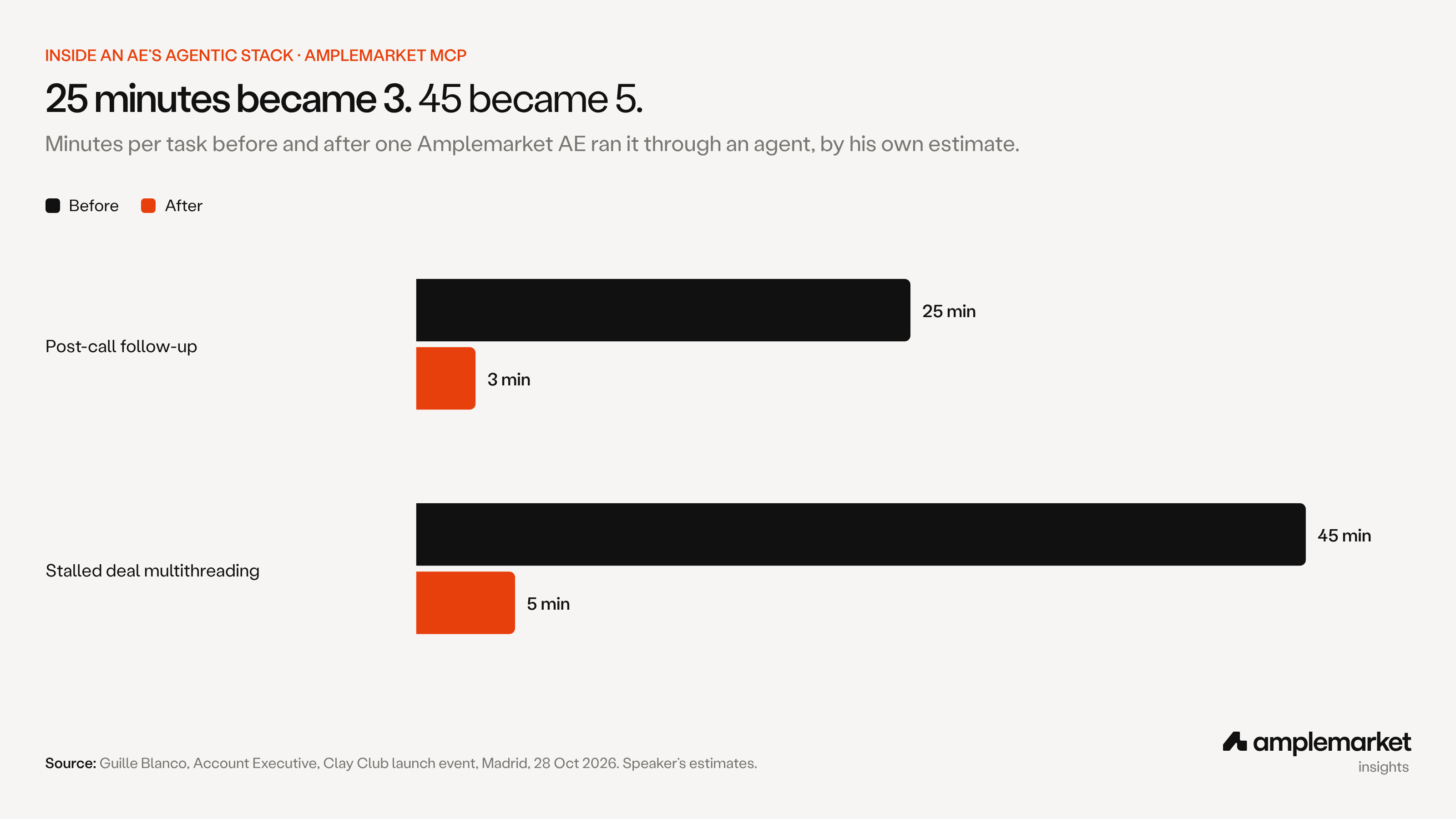
By my estimate, a follow-up used to take 25 minutes. Now it takes 3 minutes of review.
The bigger win is the quality floor. Every follow-up is now as good as my best one.
It's also the moment that got the strongest reaction in Madrid: when the follow-up draft came out sounding exactly like me.
What happens when a champion goes quiet?
When a champion goes quiet, multithread the account: map the buying committee, check exclusions and reach new contacts with a personal sequence. I hand that to the ghosting multithread skill.
When I tell it "he's ghosting me", it takes over:
- Map the account across sales, RevOps and leadership.
- Rank contacts by relevance and seniority.
- Check exclusions, so no customer or open conversation gets touched.
- Write per person, referencing the evaluation without oversharing.
- Load the multithread sequence.
By my estimate, this went from 45 minutes per stalled deal to 5.
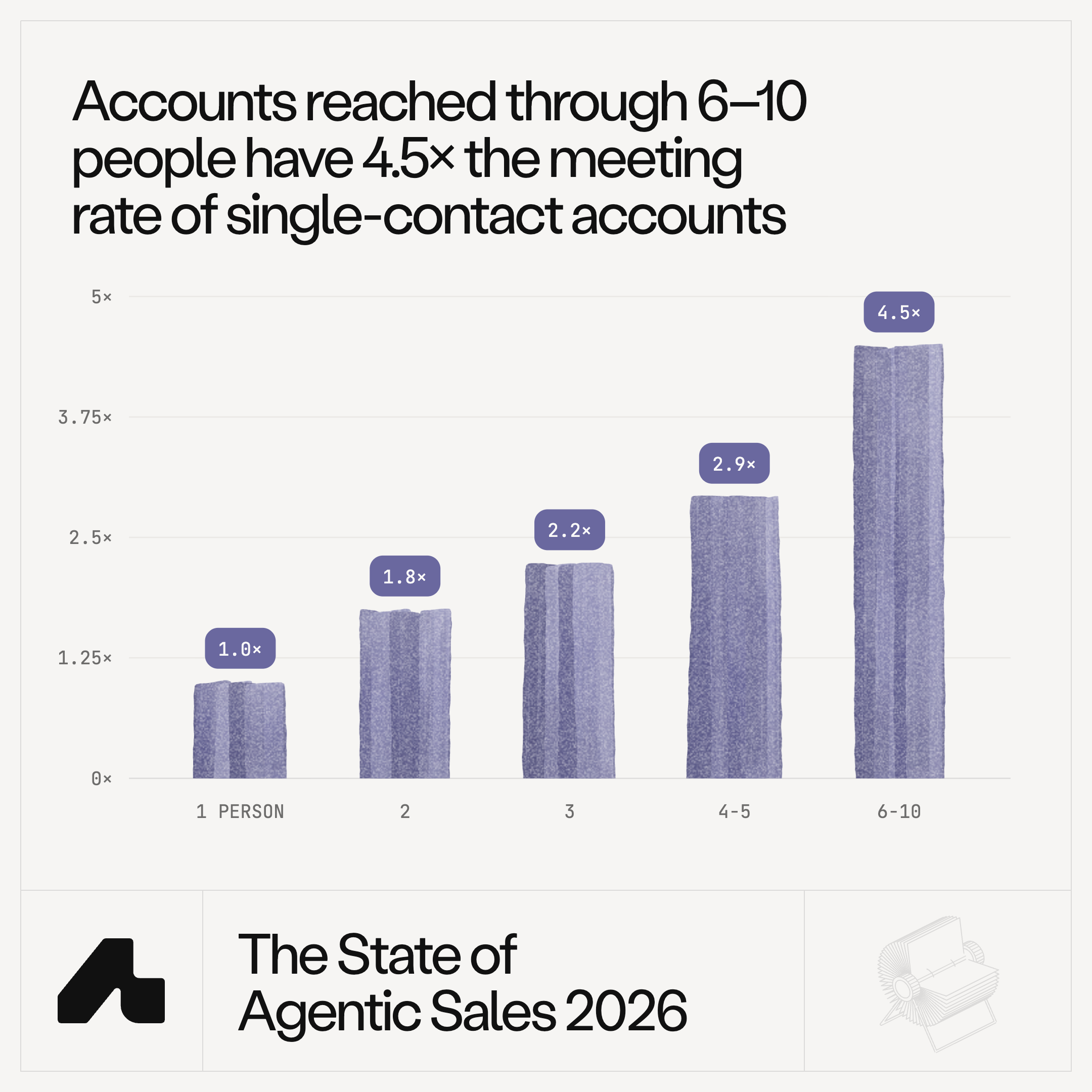
It's worth the effort. In The State of Agentic Sales 2026, accounts reached through three or more people had 3.6x the meeting rate of single-contact accounts, and 4.5x when six to ten people were reached (Q2 2026).
How do you trust an agent with customer-facing work?
You trust an AI agent with customer-facing work by never giving it the last word. My rule is simple: anything reversible, the agent does alone. Anything a customer sees, I approve.
My setup runs on four guardrails:
- Drafts, never sends. Every email and Slack message lands as a draft I approve.
- Read-only CRM. The agent reads Salesforce. It doesn't rewrite my pipeline.
- Hard stops. After five unanswered follow-ups, the deal gets flagged, not chased forever.
- Humans own money. Pricing, discounts and contracts go through me and deal desk.
What went wrong, and what did it teach me?
I've learned a few things while improving this process, including three things that broke, so each one became a rule.
That's the loop that makes the system better over time. It's how the system ends up better than you on a Friday afternoon.
What changed after automating?
By my estimate, I get more than 20 hours a week back, now spent on calls, prep and deal strategy.
But the bigger thing is consistency. Nothing falls through the cracks anymore and every deal gets touched when it should.
The agent also gives me context across tools. It'll notice a trial user went quiet in Snowflake, a competitor mentioned on a call, and an unanswered email, all on the same deal.
I'd never connect those three things on a busy day.
None of this takes me out of the deal. Instead, it gives me more time for the parts only I can do.
The State of Agentic Sales 2026 points the same way: reps combining calls with three or more AI tools booked 2.4x as many meetings as reps doing neither.
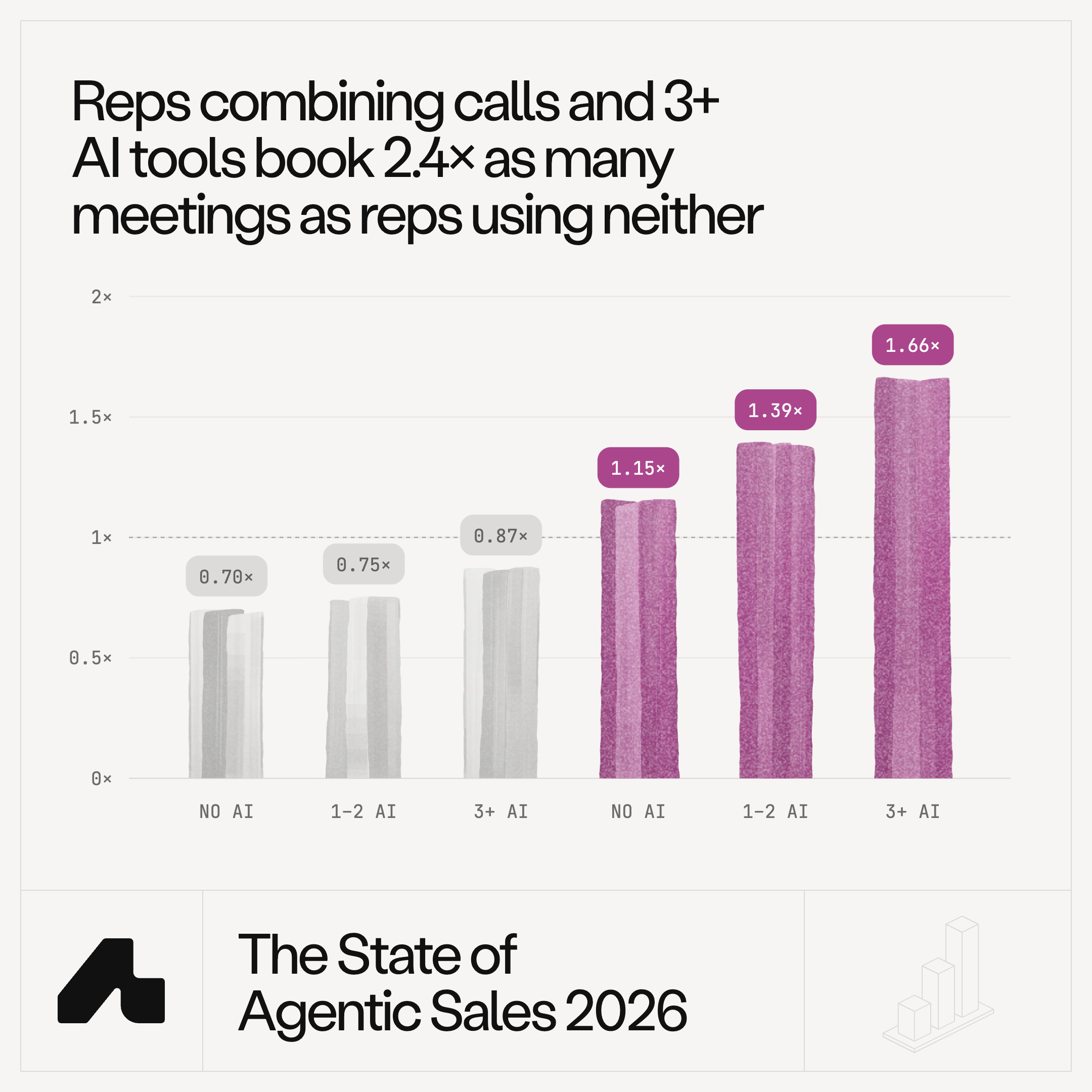
AI widens the funnel. A person on the phone closes it.
What did people in the room want to know?
After the talk, most questions were practical: "how do I set this up?" and which skill to start with.
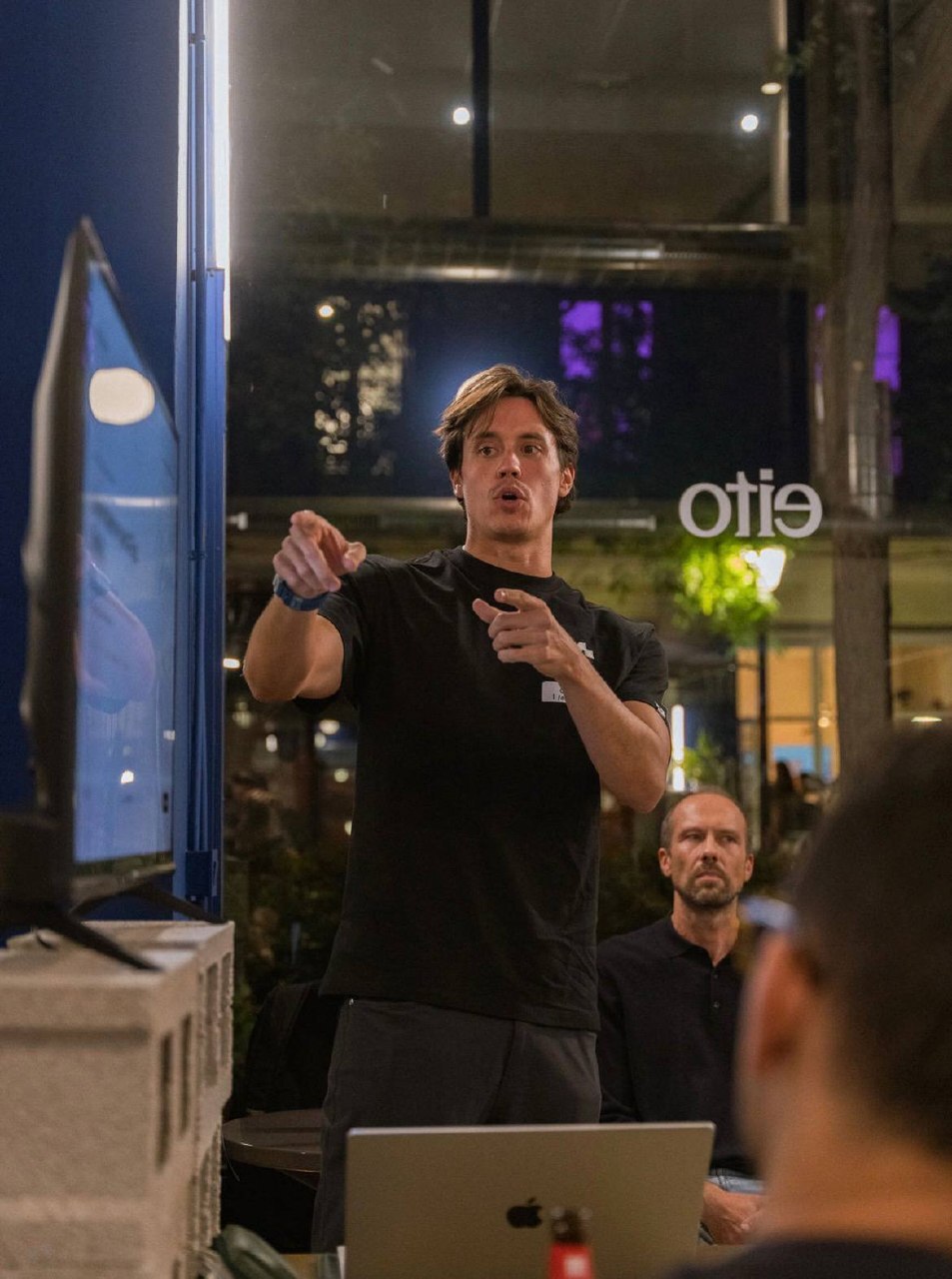
The people I spoke to fell into two groups: founders doing sales themselves with zero time, and small teams trying to cover more pipeline without hiring.
For them, I see value in two places: signals plus Duo Copilot for prioritizing who to reach, and the MCP, so they can plug Amplemarket into their own agent workflows.
How can another AE start?
Pick the one task you hate most and repeat daily. For most people, that's follow-ups. Connect your CRM and email, write down exactly how you do it, and turn that into a skill. Once one works, the next ones go way faster.
The three steps I shared in Madrid:
- Pick the task you do twice a day. For most sellers, that's the follow-up.
- Write the playbook down. Steps, tone, rules, and what "good" looks like.
- Every mistake becomes a rule. Fix it once, and the agent never repeats it.
If you'd rather not start from a blank page, the Amplemarket MCP skills library has ready-made skills for prospecting, account research, pipeline and more, including Torpedo, the same skill I use to break into accounts.
What's the biggest mistake to avoid?
The biggest mistake is automating volume before quality.
If your targeting and copy are bad, an agent just helps you send bad emails faster. Nail the ICP and the message first, and always keep a human check before stuff goes out.
Doing it by hand vs. running it through an agent
What's next for how sellers work?
Sellers will build their own stack instead of waiting for ops to give them one. Less clicking through tools, more writing down how you sell once and letting an agent run it.
The best reps will be the ones with the best playbooks, not the ones who grind the most tabs.
I closed my talk with a line for each side of the table, and I'll share it here as well.
Founders: give your reps the connections and let them build.
Sellers: one task, written down, fixed when it breaks.
Final takeaway
I didn't automate selling. I automated the work around it.
One agent for the thinking, the Amplemarket MCP for the doing, skills to keep it consistent, and a human check on everything a customer sees.
That's how I run my week in 2026: playbook first, agent powered, and still a person on the phone when it counts.
Want to build your own? Start with the Amplemarket MCP.
Want to join us?
If this sounds like a team you'd want to be part of, we're hiring. Check out the open roles on the Amplemarket careers page.