Published
Most cold calling advice picks a side: dial more, or dial smarter.
My SDR team does both, and Amplemarket's AI dialer is what makes that possible.
More dials only pay off when every conversation still starts with the right reason, at the right moment, with the right person. That’s intent, timing and relevance, and the dialer puts all three in front of the rep before they say a word.
This is how my team uses Amplemarket’s Parallel Dialer day to day: which dialing mode they pick for which task, what happens in a call block, how they open, and what changed in the numbers.
But first, let’s meet the people behind it.
Meet our SDR team
Amplemarket’s SDR team isn’t your “typical sales team”. They came to the SDR seat from very different places, experience levels and backgrounds.
→ Jordan Ballerine (that’s me): a career test in college told me to go into sales, and I said pass. Over a decade later, I’ve spent my whole career in it. I implemented Amplemarket at my last company and liked it so much that I joined as SDR Manager in June 2025. I live in Madison, Wisconsin, and outside of work you’ll find me camping, fishing, at a concert or traveling.
→ Roy Shin: born in Los Angeles and a SoCal native, he went to UCLA and planned to become a lawyer before switching to sales. Off the phone, he’s at the gym or planning his next road trip.
→ Jesse Chaney: the longest-serving SDR on the team, having joined in February 2025. He’s based in Southern California and loves animals and the outdoors.
→ Connor Priest: grew up in Ohio and spent two summers selling door to door in Cincinnati and Austin before joining in September 2025. Outside of work, he plays basketball and travels.
→ Brian Moore: has lived in Kansas his whole life and went to the University of Kansas, which made him an avid college basketball fan. He started in public accounting before moving into software sales.
→ Liam Catlin: grew up on a small farm outside Boston and now lives in Charleston. He’s a self-described “chronic morning person” who runs before work and could talk your ear off about cars.
→ Diogo Santos: has lived in Coimbra, Portugal, his whole life and founded a healthtech startup before moving into sales. He’s played rugby most of his life and unwinds with trail running and hiking.
→ David Roche: has lived in Dublin his whole life. He’s played competitive basketball for 18 years and says it taught him teamwork, leadership and how to learn from losses.
→ Damhán “Dav” Sanderson: it’s pronounced “Dav-on,” but everyone calls him Dav. He was born and raised in Ireland, went to university in Leeds and plays football for a local team.
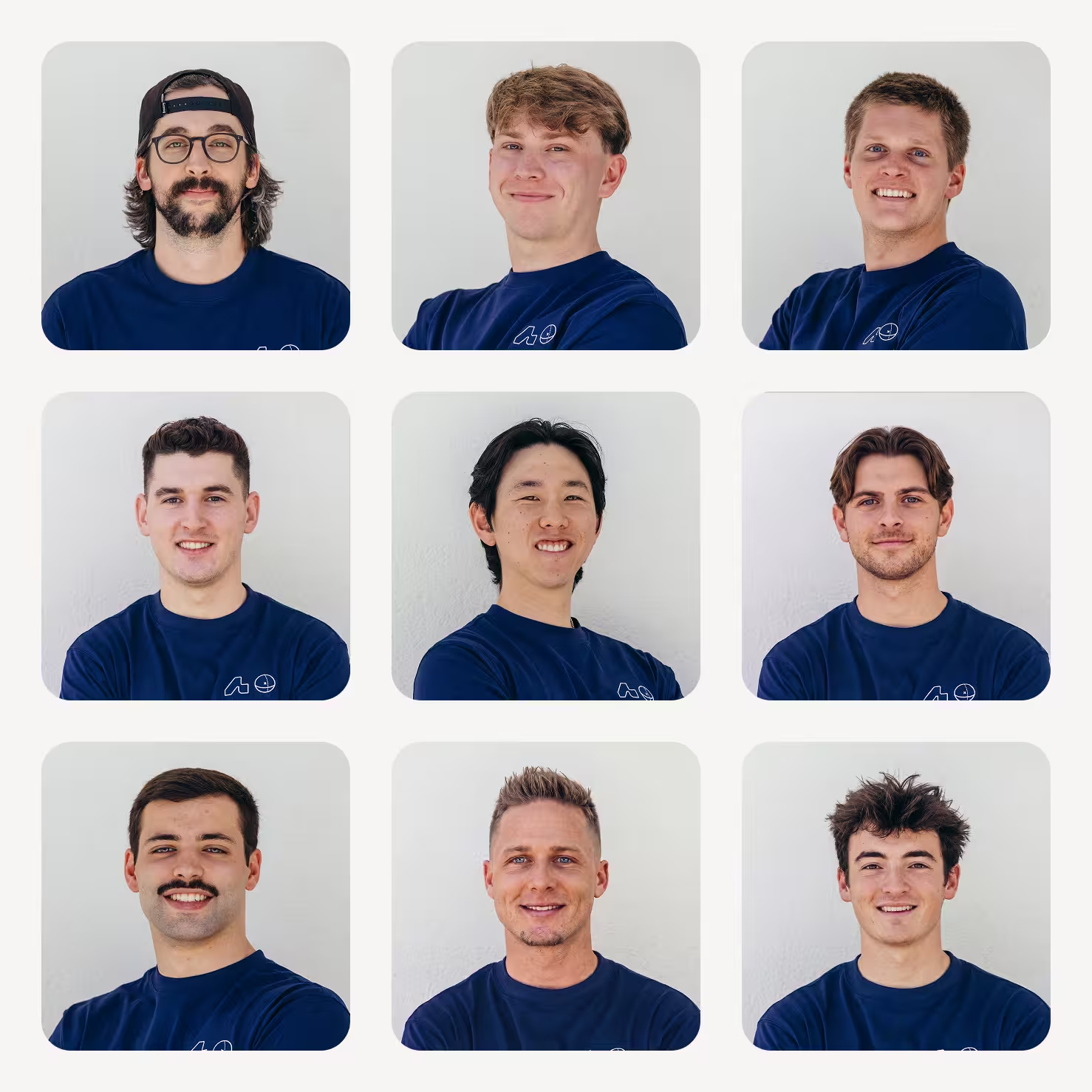
Different countries, cities and backgrounds, but one thing in common: they’re at their best on the phone.
So how do they actually use the dialer?
Parallel, power or click-to-call: which one do our SDRs use?
All three. The task decides the mode, and the task comes down to intent: how much do we already know about this person, and how warm are they?
| Mode | Lines | What our team uses it for | Why |
|---|---|---|---|
| Parallel dialing | 2 to 3 | Cold, signal-based tasks we get a lot of in a day, like job promotions or hiring signals | A rep might have 50 or 60 calls with the same talk track. They stay in one stream of consciousness without worrying about who picks up or why they’re calling. It’s a quantity play. |
| Power dialing | 1 | Warmer or more sensitive tasks, like closed-lost opportunities or past prospects who looked at the platform before | One line leaves room for a quick look at extra context before the conversation starts. |
| Click-to-call | Manual | Follow-ups. “Call me in Q3”, “call me tomorrow at 2pm”, and anyone in pipeline who’s no longer in a sequence | The call already has a set reason and a set time. |
Amplemarket’s Parallel Dialer runs 2 to 5 lines, and setting it to 1 line turns it into a power dialer. Our team stays at 2 to 3 lines, which is also where we tell customers to start, because more lines don’t always mean better calls.
Rule of thumb: sequences run on parallel or power, everything outside a sequence is click-to-call.
Picking the mode is the "easy part". What makes it work is what happens once the block starts.
What happens in a parallel call block
Simply put, a rep loads one batch of tasks and dials through it in a single sitting. Here’s what that looks like from their side:
- Load one task type. The block starts with a single kind of task, like hiring signals, so every connect builds on the same pitch.
- Let the dialer call. It rings 2 to 3 prospects at once. As soon as one person answers, the other calls stop and the rep is connected to that person. Amplemarket’s own audio model tells a person from a voicemail in real time, so voicemails are handled without the rep.
- Read the contact page. When it opens, the rep checks name, title, company and which sequence the prospect came from.
- Pull context while talking. From there they may open Salesforce, the Amplemarket account or LinkedIn, and they bring up the company website during the call.
That’s the whole loop, and the prep happens while the phone rings, not before every dial.
It works because the context is already there. By the time someone picks up, the rep can see why we’re calling this person (the signal behind the task), why now (a recent promotion or a new hiring push), and what they’ve already heard from us (the sequence they came from). Intent, timing and relevance sit on one screen, so call 150 of the day can sound as prepared as the first.
None of this came out of nowhere. It’s the result of a lot of iteration on the team, and here are some of the lessons that came out of it.
Cold calling tips from our SDR team
The lesson we learned the hard way: batch your tasks
You can’t toss all your tasks into the parallel dialer.
Hiring signals, lost opportunities, recent promotions, webinar attendees and ebook downloads are all different pitches. Mix them in one block and every connect starts with mental gymnastics: who is this, and why am I calling?
That’s why I build batching into how new reps ramp. When someone new starts on the parallel dialer, I have them run one task type per block. Hiring signals in one block, lost opps in another. Once they can deliver each pitch without thinking about it, they can start mixing. Until then, mixing just turns every connect into mental gymnastics.
Batching is what helps keep volume from turning into sloppy calls.
It also sets up the opener. When every connect in a block shares the same reason for calling, the rep already knows their first line.
How do you open a parallel dialer call?
Act like they already heard you, then go straight into the pitch.
When a parallel call connects, ninety-nine percent of the time the prospect has already said hello and is waiting. Answer with “hello?” and, as I tell my team, you’re two owls hooting at each other. Once you’re connected, start talking with confidence.
Here’s one opener our team uses:
“Hey, this is {name} calling with Amplemarket. I was actually giving you a call {prospect name} because I saw you are the SDR leader over there at {company}. I’m just an SDR doing some cold calling, so I figured, as a sales dev leader, you could appreciate a well-executed cold call. You got 30 seconds?”
Our SDRs use a few openers, and which one they pick depends on what they know about the prospect. We break down the openers, objection handling and meeting asks that booked real meetings, with excerpts from our own calls, in the next post in this series.
Whatever the opener, what matters is being relevant, honest and human.
That covers the moment they pick up. But relevance starts before the call, and that’s where the multichannel sequence comes in.
How calls fit into our multichannel sequences
The dialer doesn’t work alone. Every call our SDRs make sits inside a multichannel sequence, and the call carries the same reason as the email or social message before it.
By the time the phone rings, the prospect may already have seen our name, and the rep already knows why this person, and why now.
Here’s Jesse Chaney’s typical sequence:
- Day 1: A tailored email or social message with the specific reason we’re reaching out, plus a call task the same day.
- The rest of the sequence: Three emails plus a fun, witty breakup email, around seven call tasks and two social message tasks.
- Length: 15 business days at most, calling about three times a week, so the prospect sees the rep has been trying to reach them.
- Goal: A yes or a no. A no is just as good as a yes, because it tells us to point our effort somewhere else.
The bespoke reason from the email goes into the call script too. That way the rep never asks “did you see my email?” and gets derailed while the prospect goes looking for it.
When a call connects, the prospect comes out of the sequence, gets a personalized follow-up email, and the rep owns that relationship from there. For high-value prospects still in the sequence who we couldn’t reach, we may send a one-off email letting them know we’re chasing them down.
What the data says about multichannel sequences
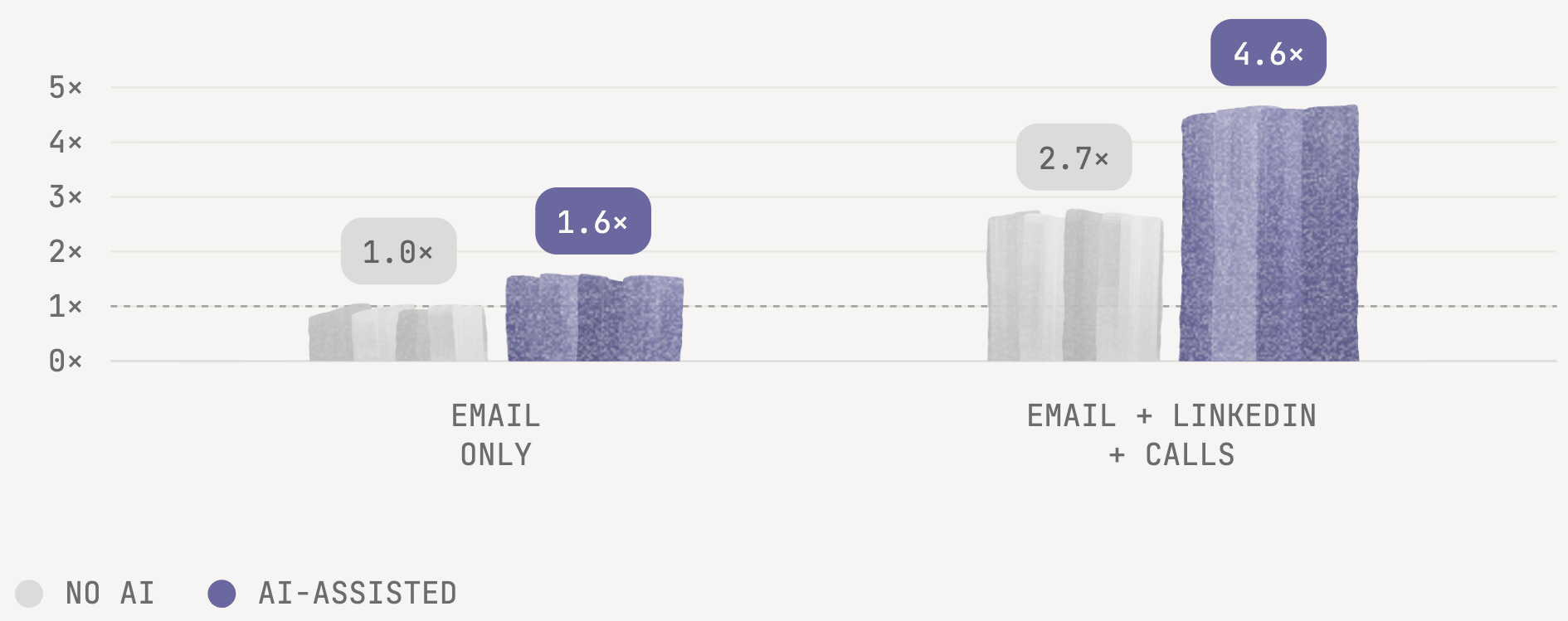
Mixing channels isn’t just a habit of our team. In The State of Agentic Sales 2026, our research across nearly 49 million prospects, AI-assisted sequences that combined email, LinkedIn and calls had 4.6 times the share of interested prospects of email-only sequences without AI.
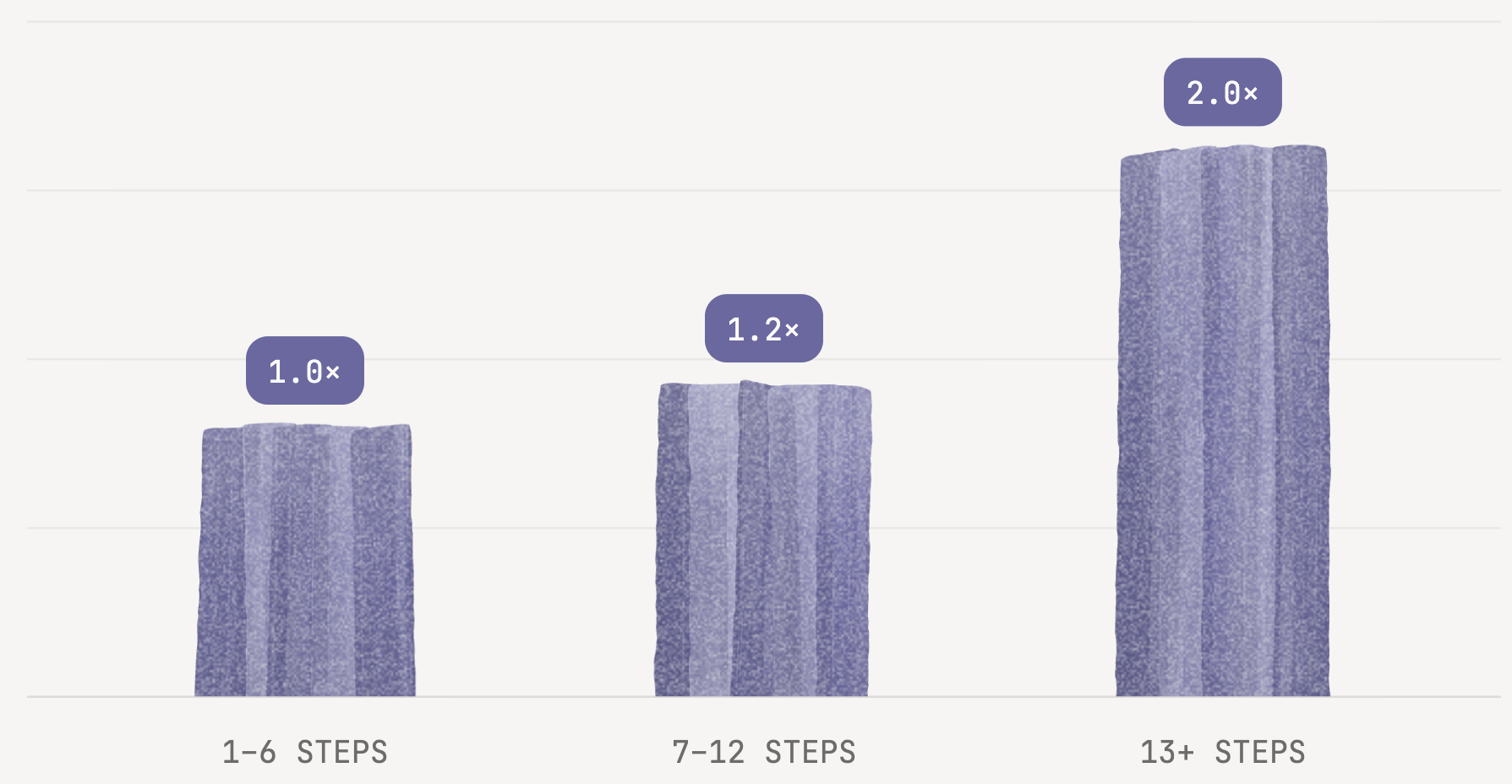
Longer sequences also book more meetings. Sequences with 13 or more steps booked 2.0 times the meetings per prospect of sequences with 1 to 6 steps.
With about seven call tasks alongside the emails and social messages, Jesse’s sequence sits in that longer group.
These are observational comparisons across many teams, so they show what goes together with better results, not proof that the channel mix alone causes them. The channel mix works best alongside everything above: a real signal behind the call (intent), reaching out while it’s still fresh (timing), and a reason that fits the person (relevance).
Our own numbers tell a similar story.
What changed in our numbers
Volume went up fast, and the calls kept converting.
| What we measured | Result | When |
|---|---|---|
| Calls per day, top reps | From 60 to 100 to 200 to 300+ | Within two months of switching |
| Calls in one call block | About 200 | Within the first month |
| Team dials per month | About 30,000 | Within a quarter |
| Connect rate | Held steady | Over our first 30 days |
| Meetings booked by phone | About 70%, the same share as before | Over the last quarter |
Before the Parallel Dialer, 60 to 100 calls took most of a rep’s day. With call volume up and the phone still booking about 70% of our meetings, the total number of meetings went up too.
The method also helps new joiners hit the ground running. Liam Catlin is the clearest example: on his first day of calling, he got a CEO on the line in a power dialing session and booked his first demo.
More calls only matter if the connects still turn into meetings.
Those results didn’t come from the dialer alone. The team has helped shape it too.
How our SDRs helped shape the dialer
Our SDR team was among the first to use the Parallel Dialer every day, so they were well placed to spot what could work better. Their feedback has helped our product and engineering teams decide what to improve.
A few of the team’s requests that are now live:
- Live Transcript and Force Connect. Diogo Santos asked for “a live transcript of the call when it’s dialing,” so he could tell whether a voicemail or a call screener had picked up. Jesse Chaney saw a second use: “if we see that someone has said hello on the other line and we could force connect the call then we can start a conversation before the lead hangs up.”
- Power Dialing. Jesse asked for “parallel dialing just with one line,” because “with large call heavy teams, those clicks will add up quickly.” It went live two days later.
- Skip Call and Remove from Sequence. David Roche wanted to act on the queue without leaving the session: “If it’s a persona or company that I know is not a good fit I’ll click remove from sequence. Sometimes I’ll skip the calling task and call them later.” Both are now on the queue, next to an Upcoming view.
Other improvements come from watching how calls themselves are changing. With Apple’s iOS 26 and Google Pixel’s Call Screening, more calls are now answered by an AI assistant that asks who’s calling and why before the prospect decides to pick up.
So the Parallel Dialer now handles call screeners automatically:
- Record once. Reps record a short introduction explaining who they are and why they’re calling.
- Detect and respond. When a call screener answers, the dialer recognizes it and plays the recorded message.
- Wait and connect. The call stays active, and the rep is connected as soon as the prospect accepts, while the other lines keep dialing.
- Handle the outcome. If no one accepts, the call ends and is logged, with its own Call Screener disposition when the message was delivered.
Reps can follow each screening as it happens, right in the dialer. It builds on what Diogo asked for in the first place: knowing when a screener, not a person, has picked up.
Feedback from people who dial all day helps decide what gets better next.
Up next
Coming soon: what actually works on a cold call. We went through recordings of our SDRs’ booked calls and pulled out the openers, objection handling and meeting asks that worked, in their own words.
Want to join us?
We’re hiring SDRs who want to get good at the phone. If this sounds like a team you’d like to be part of, see the open role or visit Amplemarket’s careers page.